
Have you ever thought about who invented work or labour and why do we work?
With work so hard to find as well as its increasing pressures on the human mind and body, I thought I would reflect on this phenomenon for my September blog.
Work in Eden
According to the book of Genesis, God established work as a fundamental, good part of human existence before the fall into sin.
- Work was an example of what God did.
God worked for six days to create the universe and everything in it, then rested on the seventh day. Scripture describes God actively making, forming, fashioning, and planting – all examples of work or labour. God’s rhythm of working and resting served as a foundational pattern for humanity that still exists today.
- Work was a Blessing.
God placed the first human in the Garden of Eden to tend and keep it (Genesis 2:15). This means the original design was for work to be a gift and a blessing, not a punishment or burden. Through meaningful tasks like caring for the earth and naming the animals, humans reflect God’s creative character.
- Work was an expression of human dignity.
Work was designed as an expression of human dignity, meant to cultivate the earth, care for creation, and reflect God’s own creative nature. It was a blessing – a pure, joyful act of creative stewardship, not a punishment or burden. Tasks were deeply satisfying and energizing, carried out without debilitating physical pain, mental burnout, or overwhelming anxiety. Human worth was anchored entirely in being made in God’s image, meaning work added expression to life rather than defining a person’s worth. The natural world cooperated fully with human effort, yielding a direct and predictable return on time and energy invested.
Modern Labour
What Changed? The fall into sin in Genesis 3 radically transformed work from a seamless blessing into a frustrating struggle, full of toil, resistance, and decay. Because of sin, we experience the following:
- Work Became Painful Toil
Before sin entered the world, work was satisfying and fruitful. Afterward, God told Adam, “Cursed is the ground because of you; through painful toil you will eat food from it all the days of your life” (Genesis 3:17). Work itself is not the curse, but the curse made work physically and mentally exhausting.
- Creation Resists Human Effort
The environment went from a perfectly cooperative garden to a resistant landscape. Genesis 3:18 notes that the earth would produce “thorns and thistles.” In modern terms, this represents frustration, setbacks, and systemic friction—such as physical challenges (bad weather, plant diseases, and infertile soil; market crashes, broken equipment, creative blocks, and administrative red tape.
- Separation of Effort and Reward
In a fallen world, hard work no longer guarantees a successful outcome. The introduction of sin meant humans could labor endlessly only to face crop failure, business bankruptcy, or layoffs. The natural connection between input and output has been fractured. Work meets resistance, represented biblically as “thorns and thistles,” which translate in modern life to administrative red tape, market crashes, equipment failures, and project setbacks. People often tie their entire self-worth and identity to their job title, productivity levels, or income, making work an intense source of pressure.
- Distorted Motivations
The fall corrupted human hearts, which distorted the purpose of work. Instead of working to glorify God and serve others, work often became driven by: Idolatry: Finding one’s identity, worth, and security entirely in a career. Greed and Exploitation: Using labor to accumulate wealth selfishly at the expense of others. Laziness: Viewing work as an evil to be avoided entirely, rather than a divine calling.
Ultimate Futility of Modern Work
God told Adam, “By the sweat of your brow you will eat your food until you return to the ground… for dust you are and to dust you will return”(Genesis 3:19). The fall introduced mortality, meaning that no matter how grand a person’s life’s work is, they will eventually leave it behind, creating a sense of futility and transience, a central theme explored in the Book of Ecclesiastes.
In the biblical wisdom literature of Ecclesiastes, the writer uses the Hebrew word hebel (often translated as “vanity” or “meaningless,” meaning a vapor or breath) to describe the core paradox of work: you can do everything right, labor with total skill, and still end up with nothing permanent.
As you reflect on Labour Day 2026, know that in the end, work and its by-products are all transient. You may pour your finite time, energy, and mental health into your work. The ultimate reality is that you do this with systems that are inherently temporary. These systems are also predictable and indifferent to their existence. Beware then – You cannot outwork work.
Let this be your guide – ALWAYS, and ensure you take time for your self and others.
Today is Earth Day and I am delighted to share that I’ve published my first children’s book – Marlee Mallard Keeps Her Home. My career has been rooted in economics and strategic planning—looking at systems, data, and resources and planning how to effectively use them for the best outcomes. However, recently, I took a detour into a different kind of system: the natural world of a mallard duck named Marlee.
I’ve just published in my latest blog post, a behind-the-scenes look at my transition from Economist to Children’s Book Author. It’s a deep dive into the “Rhythmic DNA” of storytelling and why building eco-literacy in the next generation is the most important long-term investment we can make.
If you’ve ever considered a “creative pivot” or wondered how your unrelated skills feed your current work, I’d love for you to join the conversation.
Please also join me for my official book launch and signing events. I would love to see you and endorse copies for you and your precious little ones. Happy Earth Day, 2026! Let’s take care of it! 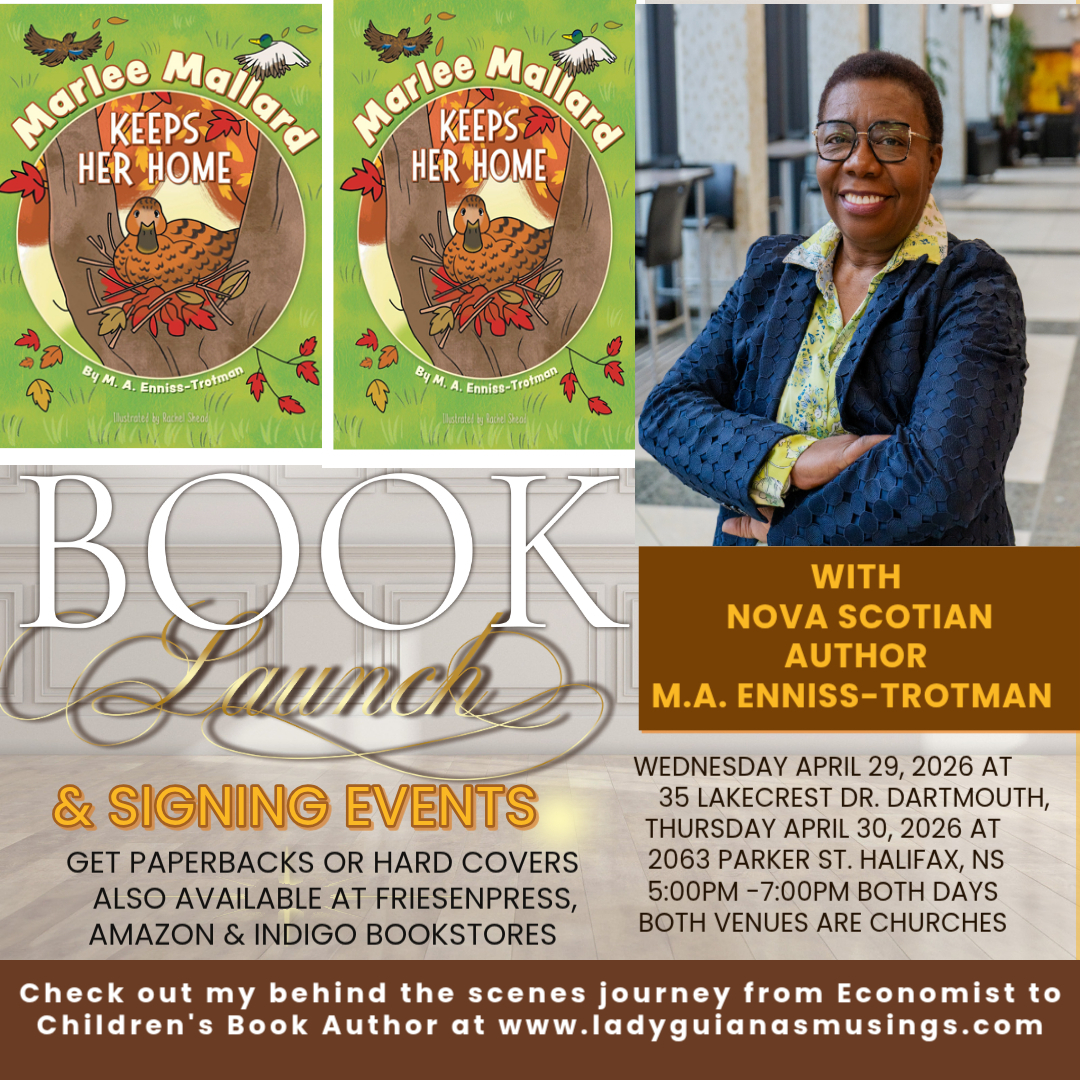
 Writing has always been my quiet hobby that fills my cup in ways nothing else can. Yet, if you had told me a few years ago that I would write a children’s book, I probably would’ve giggled. Not because I didn’t think it was possible, but because it simply wasn’t on my radar.
Nonetheless, that is the wild, beautiful secret of the creative journey: you start in one place, and if you stay open to the nudge, the path unfolds in the most unexpected ways. This month, I am pulling back the curtain on my path to creating Marlee Mallard Keeps Her Home. It’s a project that brought me full circle, and I hope it encourages you to trust your own instincts, no matter how “off-track” they might seem.
The Spark: Listening to the Whisper
If you have ever felt a quiet, persistent tug at your heart—a whisper that refuses to be ignored—then you know how this story begins. I didn’t plan this, but recently, something shifted. A creative spark began to glow, and before I knew it, I was leaping headfirst into a world I had never explored- writing my first children’s book.
I want to share the reality of my writing journey—not just the glossy, finished book cover, but the “messy middle,” the detours, and the joyful surprises. Whether you’re dreaming of your own book or just curious about the anatomy of an idea, I hope this gives you permission to follow your own whisper.
The Origin: Where It All Began
This wasn’t a calculated move; it was a “heart nudge.” I’ve been in a season of transition lately—physically, creatively, emotionally, and spiritually—and through that shift, a calling bubbled up. I wanted to do something that mattered.
An amateur psychologist at heart, I’ve always been curious about how humans tick. I’ve also attempted songwriting (admittedly, with more passion than skill!), but I realized that every story has a heartbeat. I call it the Rhythmic DNA—that invisible flow that connects what we feel to the words we choose. Writing for children shares that same elusive rhythmic DNA—the flow between words and feelings—and weaving complex emotions into something simple, periodic, and powerful.
Last July, I felt the first flicker of an image: a mallard duck named Marlee. She was born from memories of my childhood home, where a pair of ducks, Lonely and her sister whose name I can’t remember now, scrounged in a small shallow pond in the yard, oblivious to the world beyond the water’s edge.
Finding the Story: From Memory to Activism
The story truly clicked during my weekly 3.5km run. One of the man streets where I walked and ran was undergoing rapid housing development. Then one morning , I noticed that a thick grove of trees that always offered me shelter on the final leg of my run was simply… gone. I began to wonder: How would this affect Marlee? What would happen to her when the landscape changes overnight? Where would she nest when her shelter disappears?
Marlee Mallard Keeps Her home became a vessel for something I care about deeply: eco-literacy which teaches children about the economics of nature – that every habitat has value and every loss has a cost. Growing up surrounded by fruit trees and vibrant animal and insect life gave me a natural blueprint for environmental stewardship. I wanted to help children process “eco-anxiety”—the worry that comes with losing habitats—by showing them they have a voice. Accordingly, Marlee evolved from a quiet duck into an unlikely activist, standing up for her forest home alongside her other displaced friends.
The Craft: Writing with Rhythm
Writing a children’s book looks simple but every word must earn its keep. Because I knew the message I had so clearly, the first draft poured out of me relatively quickly. It felt like songwriting—finding the “beat” of the story and ensuring the emotional flow carried the reader forward. Since my sketching skills are non-existent, I knew Marlee and her world would need a professional illustrator to bring visual soul to the page. Researching mallard genders, habitats and mating seasons allowed me to give the illustrator a specific emotional language: I wanted Marlee to look worried, fearful, then excited, and finally, triumphant.
The Ups and Downs: Lessons from the “Messy Middle”
Let’s be honest: the creative process was as frustrating as it was rewarding. There were moments when I wanted to walk away. I struggled with story arcs, agonized over the right words, word counts, and faced the painful task of “killing my darlings”—scrapping characters I truly loved because they were cluttering the message.
Why Scrapping Characters Made Marlee Stronger
In a children’s book, every named character is like a brick in your reader’s backpack. For a young child, too many bricks make the story too heavy to carry. As I dove deeper into Marlee’s world, I realized that I had packed too many characters. Although they had names and quirks I adored, I had to let them go to let the story beathe and take flight.
My “Culling” Criteria:
- The “Mirror” Test: If two characters served the same purpose (like two “wise friends”), I combined them. One strong voice is better than two echoes.
- The “Protagonist” Filter: If a character took the spotlight away from Marlee or solved the problem for her, they were cut. Marlee needed to be the hero of her own fight.
- The “Pacing” Check: If a character required a long backstory that slowed down the story’s “heartbeat,” I removed them to keep the plot snappy and engaging.
Having created a “garbage” pile, I wasn’t afraid of it. Every character I cut taught me more about who Marlee was and acted as the invisible scaffolding that allowed the final story to stand, teaching me some important lessons.
Three Vital Lessons from the Struggle:
- The “Garbage” Matters: Your discarded ideas aren’t failures; they are the necessary experiments that lead you to the truth of your story.
- Stay in the “Now“: It’s easy to get paralyzed by deadlines or the very real financial costs. Breakthroughs happen when you stop looking at the mountain and focus on the single sentence right in front of you.
- Fight the Rush: My “economics brain” constantly tried to optimize and speed things up. But this was a passion project. It deserved a pace that was slow, steady, and—most importantly—real.
What This Journey Taught Me
Your creative journey doesn’t move in a straight line. It zigzags, loops, and pauses, but it always moves—bringing every part of you along for the ride.
The published book “Marlee Mallard JKeeps Her Home” is my most recent “inspiration chapter,” but it is also a reflection of everything that came before it. So, if you’re in the thick of your own process (or just gathering the courage to start), here is what I’ve learned from this wild ride:
- Trust the Pivots: I couldn’t have predicted the timeline or the sequence of this project, but I’ve learned that each shift—each “unexpected detour”—led me closer to what felt true. Let your curiosity lead, especially when it takes you off-road.
- All Skills are Connected: Even the things that seem unrelated are feeding your work. My history with attempts at songwriting gave the book some of its rhythm; my interest in psychology gave the characters their heart. No experience is ever wasted.
- Let the Project Change You: Big projects are meant to stretch you creatively, mentally, and emotionally. Don’t resist the tension. Lean into the growth that happens between the first draft and the final page.
- You’re Allowed to Evolve: You don’t have to stick to one niche forever. If a new world is calling, go explore it. Your past labels (like “Economist” or “Strategic Planner”) don’t limit your future possibilities.
| The Marlee Mallard Family Discussion Guide
A Note to Parents: Planting Seeds of Eco-Literacy Writing about Marlee wasn’t just about telling a story; it was about giving children the language to understand the world around them. In a time where “eco-anxiety” is a real weight for many little ones, my goal is to shift the focus toward eco-literacy. By sharing Marlee’s journey, we can help our children move from a place of worry to a place of wonder and agency. I hope this story serves as a gentle conversation starter about protecting the “quiet groves” in your own neighbourhood. Words for Young Activists Habitat (A Home): The specific place where an animal finds food and shelter. If you were a mallard duck like Marlee, what would your dream habitat look like? Displacement (The Shift): When creatures are forced to leave their homes because the environment changes. How do you think Marlee felt when her trees disappeared? Stewardship (The Care): The act of looking after the Earth, even the tiny parts. What is one small “stewardship”or “earth management” job we can do in our garden this week? Eco-Literacy (The Connection): Learning to “read” the signs of nature and understanding that we are all part of one big team. |
Allowing Creativity to be Personal
One of my biggest takeaways is this: the best work comes when we allow creativity to be both personal and polished. It happens when we stop chasing trends and start listening to what lights us up—when we finally make space to respond to those “little nudges” and persistent whispers.
I’d love to hear from you:
Have you ever had a ‘heart whisper’ lead you toward an unexpected project? Or, if you’re in the ‘messy middle’ of something right now, what is one lesson your journey is teaching you? I would love to hear your thoughts.
 February is a month with several unique awareness and observances such as Narional Self-Check month. Self-Check isn’t selfish. It’s one way to increase the odds of avoiding chronic disease and other preventable conditions like cancer, heart disease, diabetes, and obesity – conditions that are often preventable and treatable if found early enough.
WHY SELF-CHECKS MATTER
We all have our reasons for avoiding a checkup or self-check. We’re too busy. We don’t want to know the truth. Or, it just slipped our minds. National Self Check Month brings to your fingertips a variety of self-empowering and proactive early detection and preventative resources and tools to guide us through healthcare-related fears and concerns.
When you prioritize self-checks, you are investing in your own health and reducing the strain on healthcare systems. This is especially important in today’s world, where resources are often stretched thin.
CHECK YOURSELF
February is the time to do your important self-checks and/or visit your healthcare professional for a wellness check. Before you go, make a list of any concerns you may have. Include in your concerns a reminder to check on your emotional and mental health and overall well-being.
Here are some simple questions and ideas you can use during your self-check.
- Ask yourself how do you feel in this moment and how long have you felt that way? Run through every emotion you can think of, from anger and embarrassment to love and compassion.
- When experiencing or recalling a feeling, recognize how your body reacts to that feeling. Do you clench your teeth or find yourself smiling? Did your heart start to pound or did your body relax? From happiness to shame, and everywhere in between, emotions can manifest with physical reactions.
- Ask yourself if you’ve had any recurring thoughts or if your mind keeps replaying a particular encounter or conversation? Think about how you feel each time the recurring thought occurs. Does the emotion dissipate or intensify with each recurrence?
- Have you been worrying lately? If so, ask yourself if there is something you can do to change what you’re worrying about?
- Take stock of what you’re doing for enjoyment and relaxation.
- Ask yourself if you’re eating well, moving and sleeping well.
- How often do you rely on substances like alcohol, drugs or cigarettes to deal with emotions?
REMIND OTHERS TO CHECK THEMSELVES
Maybe you are proactive but someone else in your life may not be. National Self -Check Month gives you an opportunity to sit down with a loved one to share your concerns and point out ways to better health. By dedicating time to self-checks, you are improving your own health and setting an example for those around you.
REFLECT AND ACT
As you celebrate Self-Check month, let’s embrace the love we have for ourselves, our loved ones, and our communities. Let’s commit to regular self-checks, educate ourselves about potential symptoms, and take proactive steps toward better health. After all, self-care is the foundation of a happy, healthy life.
Remember, self-check is a part of self love, and it isn’t selfish.
I recently heard someone say “Gratitude makes every meal a feast.” It got me to thinking about all the things for which I am grateful. I’ve also decided to make it the topic of this month’s blog.
Let’s start with the basics: What is gratitude? According to Robert Emmons, one of the leading scientific experts on gratitude, gratitude is “an affirmation of goodness.” When we practice gratitude, we acknowledge the good things in the world and the gifts we’ve received in our lives.
“This doesn’t mean that life is perfect,” Emmons says, “it doesn’t ignore complaints, burdens, and hassles. But when we look at life as a whole, gratitude encourages us to identify some amount of goodness in our life.”
For me, gratitude is the feeling of thankfulness and appreciation for the good things in one’s life. Acknowledging life’s goodness that often comes from outside oneself, is a key component of well-being, strengthening relationships and improving mental and physical health, fostering positive emotions and resilience.
Gratitude involves recognizing blessings, both big and small, and can be cultivated through practices like saying “thank you” more often, reflecting on your challenges to see how much you have grown, and journaling leading to a more profound sense of contentment and connection.
The best way to reap the benefits of gratitude is to notice new things for which you’re grateful every day. This is one of the reasons why gratitude journaling works because it slowly changes the way we perceive situations by adjusting what we focus on.
So. For the next 30 days, I invite you to text someone and tell them something for which you are grateful and why? To my dear husband, I feel so grateful that you are in my life because you show me love every day when you make my oatmeal for breakfast.
With a grateful heart, I look forward to connecting with you in February.
“Let them give thanks to the Lord for his unfailing love and his wonderful deeds for mankind. Let them sacrifice thank offerings and tell of his works with songs of joy.” (Psalm 107:21-22)
Call me whatever you wish: a sleepyhead, a kipper, consopite[1], or doss. I love sleeping. It’s one of my favourite things in life. Curling up in a ball on my plush bed is fantastic! Sometimes when I am very tired, I wish I could sleep all day like babies and toddlers get to do whenever they so choose.
No matter the season, when lying in bed, I relish the relaxed feeling of my body as I drift into unconsciousness without a care about the next item on my to-do list. In winter, when it’s cold and dark outside, I love cozying up under a warm blanket and feeling like I’m hibernating if only for a few hours.
I’m not a sound sleeper or someone who falls asleep easily at night. So, I struggle during the summer time when it can be unbearably hot to take a break from the hustle and bustle of life and warm my eyes. That’s when I stick to the 3-2-1 rule developed by sleep experts for winding down before bedtime.
Three hours before, I avoid large meals, caffeine, or alcohol (I don’t drink alcohol, caffeine or other stimulants). Two hours before bed, I take no food or fluids. One hour before, no screens. This last one is harder than you think especially if you have a husband that sneaks to get in the last quarter of a football game before bed.
Sleep is good because it’s the foundation of wellness and happiness. According to the Centre for Disease Control, good sleep is essential for our health and emotional well-being, and though the amount of sleep you need changes as you age, getting enough sleep and good quality sleep are vital to good health.
Getting enough sleep can help you get sick less often, stay at a healthy weight, reduce stress, improve your mood, heart health, and metabolism, and lower your risk of chronic conditions like Type 2 diabetes, heart disease, high blood pressure, and stroke.
Adequate sleep also helps with memory and learning, allows the body to repair and recharge, can lessen the risk of motor vehicle crashes and related injury or death, and improve your attention and memory to better perform daily activities.[2]
Whenever I’m exhausted and away from my bed, sleep feels like a luxurious pleasure I can’t wait to taste again. That’s because sleep has a value that reaches far beyond health – it is God-given. The word of God says “It is vain for you to rise early, to retire late, to eat the bread of anxious labours— for He gives [blessings] to His beloved even in his sleep.” (Psalm 127:2, Amplified Bible).
So, this holiday season, have lots of fun and ensure that sleep is right up there on your agenda. It will add to not decrease from your merriment. Happy holidays fellow hypnophiliacs and sleepyheads and a bright, prosperous 2026!
[1] An obsolete word from Latin consopitus meaning “to put to sleep.
[2] https://www.cdc.gov/sleep/about/index.html
A purse, pocketbook, bag, carryall, clutch, and tote. These are all terms for a woman’s handbag, and the topic of the fourth instalment of Life Lessons from My Favourite Things. I have a sizable collection of handbags but I want to tell you about what I learned about myself from one special handbag, my Micheal Kors tote bag.
Gifted to me as a surprise by my dear friend, Wendy, this bag is amazing and beautiful. When I travel, I can put everything I would normally carry, and some – my wallet, sunglasses, documents, essentials like lip balm, and things I would hate to lose like my retainers, currency, and keys.
Recently, I was going through my handbag collection, and I realized that my MK bag was totally underutilized. After only a few uses, I had put back into its white dust bag and light brown box. I checked it out to see that it was still in almost pristine condition, and reflected on why this bag which was so important to me still sat protected in my closet.
Why did I put it on a high shelf while my other handbags were on readily accessible shelves?
When I think back, I can remember so clearly that day in December 2022 saying to myself, “this is a pleasant surprise when I collected a large package from an Amazon delivery driver. I wonder what prompted this.” I didn’t have to wait long because Wendy called for the second time to enquire whether I had gotten the package she sent me. You see, she had been tracking it to ensure it was delivered safely to me.
It was very important to her that I got this special gift that she was planning to give me for some time. She shared that our friendship meant so much to her over the years and how I had proven to be a kind, thoughtful, and cherished friend. She also advised that I get a dust bag for the handbag when I told her it came without one.
I remember feeling a tingle in my body and a few goose pimples on my arms as she spoke from her heart. Truly, I knew that Wendy loved me as a friend. Yet, I didn’t think that I was deserving of her largesse. She was just someone with a modest income, and in no sense rich. Yet, she had expended some of her hard-earned money to show kindness to me and to say ’thank you for being a friend’, and I felt underserving of it.
I skimmed the outside and inside of the bag and admired the spacious cavity. Immediately, I saw the magnetic closure which was supported by a metal clasp to keep things safe. The bag could also be configured to a smaller size. I thought, she really had thought about getting me a bag that was not only stylish but secure. Why me, though?
You see, I was never someone who got many dedicated gifts like this one. For the past three years or so, a group of girlfriends had been pooling funds to get each other a personal item for birthdays, and at Christmas, something for our homes. Yet, this gift struck a chord with me. Someone thought I was deserving of something special but I didn’t think so.
As I started peeling back the layers of my complex personality, I realized that I was not good at letting others love me. I was good at sharing my time, talents, and effort with others but I didn’t think I was worth being reciprocated in kind for anything. If someone gave me something, I always felt they would want something in return. Quite honestly by the end of my reflection time, it wasn’t even about the bag anymore. It was about acknowledging to myself that I was, in fact, ‘worth it’.
Lesson learned…by putting myself out there and doing things that I normally didn’t shy away from (mostly thoughtful, kind deeds for others), someone had taken notice and ultimately took the time to say ‘Thank you. You mean a lot to me’. I treasured this gesture so much that I was using the bag sparingly so that the special memory about Wendy’s action would last longer. It was important to me to prolong my MK bag’s lifespan for as long as possible.
While this is certainly not the most expensive bag I will ever own, it certainly taught me a huge and significant lesson about self-worth. I am a complete and worthy individual who deserves to be treated with the same care and attention I give to belongings like my MK handbag. Moreover, my worth isn’t determined by an item’s quality or price tag, but by my own conscious choice to value myself.
I’ve since decided to use my MK handbag more often so it won’t get dry-rotted; and every time I fish it out of its box and dust bag, I remind myself that others believe in me and love me just the way I am. I just need to believe and accept that I’m worth being fussed about at times. Showing love and appreciation isn’t for everyone else, it’s also for me.
So, have you ever thought, “this is too much for me, but just right for someone else?” I think too often as women we don’t always recognize our own value. If you’ve ever felt this way too, I hope this story provides a bit of encouragement to let you know that that you add to the lives of others will at times come back to you… as it should
God, “I praise you because I am fearfully and wonderfully made; your works are wonderful, I know that full well (Psalm 139:14, New International Version).
After taking a short break for the summer, I’m back to share the third installment of my series Life Lessons from My Favourite Things.
Open the golden, shiny wrapper and you will discover Ferrero Rocher, a chocolate of chocolates, and my favourite in the whole wide world. I love to pamper myself with them. According to Wikipedia, Ferrero Rocher, a bonbon chocolate, was introduce in Italy in 1979 and in other parts of Europe in 1982. Michele Ferrero, the credited inventor, named the chocolate after a grotto or cave in the Roman Catholic shrine of Lourdes, Rocher de Massabielle. Together with Ferrero, the company name, ‘Rocher’ is the French word for a rock or boulder.[1]
Each Ferrero Rocher ‘rock’ is made up of a whole roasted hazelnut encased in a thin wafer shell filled with hazelnut chocolate and covered in milk chocolate and chopped hazelnuts -a yummy multi-sensory experience. Thanks to its extraordinary taste, and experience and its one-of-a-kind packaging – big golden eggs, bars, and various options of package pieces – Ferrero Rocher is a symbol of celebrations across the world, perfect to show your loved ones how much you care or make moments golden and memorable.
In a world filled with processed foods and obtuse wisdom, this ‘sweet rock’ reminds me many desirable things:
- God’s Word: described as pure, golden, and luxuriously sweet, conveying delight, satisfaction and fulfilment.
- God’s Wisdom: depicted as sweet, and offering hope and a positive future to those who seek for it and find it.
- God’s Presence: a place of quiet rest and a desirable experience for those who love him, want his friendship, and seek live in obedience to his commands.
- Kind and Edifying Speech: sweet words that are like honeycomb’ pleasantness to the soul, a pure heart, and a source of healing and encouragement for others.
- Kind and Caring Actions: Christians are encouraged to show sweetness through actions of kindness, compassion, and love towards others.
- Joy and Pleasure: from being in the presence of a lover that brings pleasure and pleasant conversation.
- God’s Salvation: the sweetest gift of all that’s offered though Jesus Christ which brings us forgiveness, eternal life, and a relationship with God (John 3:16).
- God’s Kingdom: a promised place of sweetness, where there will be no more pain, sorrow, or suffering (Revelation 21:4). This is the ultimate sweetness that we can look forward to as believers. I can’t wait to be there with the sweet Rock of Ages, Christ Jesus, my Lord.
[1] https://en.wikipedia.org/wiki/Ferrero_Rocher
This second instalment of my series Life Lessons from My Favourite Things is about rocks. Yes, rocks. According to National Geographic, the definition of rock to a geologist is “a natural substance composed of solid crystals of different minerals that have been fused together in a solid lump.” Based on their formation, this fusion of different minerals assembled in various patterns and textures makes each rock a work of art.
I love rocks. I was one of those children who collected small rocks from a road or country path that caught my eye, drawing me to them. In a weird way, I never grew out of collecting rocks. On many trips, I would set my eyes on a piece of these inanimate, cold fragments of earth whether igneous, sedimentary, or metamorphic, and it would become my trip souvenir.
Why do I love rocks?
They have a natural and unique beauty – no two rocks are exactly alike. Their colours, forms and textures hold a deep mystery and create a sense of wonder and fascination. Natural rock formations are among the most beautiful, incredibly scenic places of the world.
Rocks also offer a grounding sense of connection to nature that helps people feel rooted and calm, and can be used as inspiration for art, sculpture, and other creative endeavours. In an almost weird way, I find them calming and soothing, especially the smooth ones that were weathered by water erosion.
Beyond the physical aspects, rocks collecting provides a deep connection to the natural world. Holding these bits of geological treasure in your hands gives you an intense connection to the Earth’s history and a timely reminder of the incredible forces that have shaped our planet over thousands of years.
It seems fitting that I now have a small collection of rocks in a basket in my living room. Finding those rocks was definitely not an easy task, if you are a rock lover like me. I have a few specific criteria for picking my choice rock. It must be the right shape – not too large because I have to take it back home, and have some interest in colour and mineral formation. This criterion helped me pick my most prized piece of quartz that still brings me joy decades later.
Several years ago, my youth group and I painted “Prayer Rocks” as Saturday evening social activity where we wrote down Bible promises to support what we prayed for in our lives at that time. It felt really good to write down words of hope on something so solid that helped them look even more beautiful.
Rocks and stones have been used for as long as time to build foundations and all other types of lasting structures. I have often thought that some people are like rocks, dependable, steadfast, and loyal. Jesus taught his disciples that they would be considered as wise if thy built their houses on the rock, literally and spiritually. When the storms of life come, your house would stand firm, and who doesn’t want that?
As we start spring 2025, I am starting a new blog series: Life-Lessons from My Favourite Things that I hope would take me to the end of the year. To kick of this series, I want to share some lessons about shoes. If you know me well, you’d know that I love shoes: all kinds of shoes – sneakers, sandals, flats, heels, boots; leather, patent, canvas – you name it. You can call me a shoe-aholic.
Why do we NEED shoes or do we just WANT them; or is it both – we NEED and WANT them. I am agreeable to the last option because of a few reasons.
Shoes are needed because they offer protection from the elements: cold, heat, rain, and snow. They also shield our feet from sharp objects and potential injuries like cuts, scrapes, and punctures. We also want proper shoes because they can help prevent fungal infections and other foot problems.
In 2022, to fill global needs, an estimated 21.9 billion pairs of shoes were consumed worldwide. This translates to roughly two pairs of shoes per person on the planet.[1]
Life Lessons from Shoes
Shoes, while seemingly mundane, can offer valuable life lessons about self-expression, personal growth, and overcoming challenges. They can also symbolize our journey, identity, and the importance of taking steps, both literal and figurative, towards our goals.
Here are some life lessons we can learn from shoes:
- Comfort and Fit are Important
My love of shoes stems from a desire to wear footwear that fit properly which is crucial for foot health and to maintain overall well-being. We all know that just as a poorly fitting shoe can cause pain and discomfort, relationships that don’t fit our values and goals can lead to unhappiness.
I admit that a few times I made the mistake of buying a pair of shoes based only on looks or appearance without checking to see whether they are comfortable for standing and walking. Similarly, we need to find activities and relationships that fit us well, and surround ourselves with people and things that are supportive and that bring true happiness.
We must also remember that people can appear one way – cool and friendly – on the outside but be different on the inside – prickly, critical, and untrustworthy. Yikes!
- Good Shoe Care Matters
I take good care of my shoes to make them last. I clean and polish them after each season change, especially winter and spring when they get covered by grime, salt, and water. I also keep them in boxes when they are not in use to keep away dust and to maintain the original shine.
In like manner, we should keep cleaning and polishing ourselves both physically and mentally so we could shine, remain desirable, and to ensure our relationships last. So, the next time you feel down and unmotivated, remember this shoe-lesson: Make sure you don’t let the scum from outside rot you out and make you smelly and stinky. Keep wiping the dirt away to remain clean.
Shoes are also a symbol of walking along various pathways as we journey through life. The path we take is often more important than the end goal so we should focus on the process of living, learning, and growing throughout our lives.
- Embrace your Imperfections
It’s odd that we use much of our time to take stock of our weaknesses and imperfections. We think that we are less than or not as great as the person next to us. Then someone comes along and genuinely appreciates us and heaps praise on our heads, and what do we do? We try to push them away with our own negativity.
Likewise, no shoes are perfect. Some shoes are good and some are bad but we wear them, nonetheless. So, just as there are good shoes and bad shoes, we can learn from good and bad people; from good and bad situations; from positive and negative experiences, as well as from successes and failures. So, learn from shoes and embrace your imperfections and learn from your mistakes.
- Stay Grounded
It doesn’t matter whether your shoes are cheap or expensive, branded or local, custom or mass-produced, they always have to remain beneath your feet, and on the ground. In like manner, we should never forget our true place. It doesn’t matter how successful we become; how much money we have, or how famous we get, we must never forget our roots or from where we came. This ensures we stay humble and firmly grounded like our shoes.
- Beware of the Footprints You are Leaving
Just as shoes leave a footprint on the ground as we walk, we leave our own mark on the world in his journey called life. In the book of Ephesians, chapter six, and verse fifteen, the Bible counsels that a Christian must have “feet shod with the preparation of the gospel of peace.”
This phrase, part of Paul’s description of the “armour of God”, is symbolic of a Roman soldier’s equipment, and is used to show how the component parts of the Christian’s spiritual body armour work together.
More especially, the expression “shod feet” means to wear shoes. A soldier’s shoes are designed to grip the ground firmly, even when it’s slippery. Similarly, having the gospel of peace fitted into your shoes allows us to make various footprints: we stand firm in our faith; we share with others the good news that salvation comes only through Christ’s sacrificial death on the cross; and we fight for what’s true and right. However, shoes not only prepare us to share the gospel of peace but show that one is at peace with God.
- Maintain both Sole and Soul
You must have heard the saying, “There is always room for another pair of shoes.” This saying is true for a few reasons: Shoes may wear out failing to provide adequate support and protection. We need specialized ones for athletics and other sporting activities, and for special events like weddings and graduations. We also need different types of shoes for a particular activity (e.g., we need rubber boots to wade through water or mud).
The shoe sole is one of its core elements without which the shoe won’t be able to sustain itself for long. As such, we replace our shoes when their soles fail. Similarly, chapters of our lives end as happens when a friendship or marriage fails or when someone retires from a job or dies.
Learning to embrace the wear and tear of life can build resilience and make room for new beginnings. As souls, we must also take care of our real selves as we live on this earth and to prepare for eternity. To protect body and soul, we must be spiritually strong to face the highs and lows of the Christian life.
Finally, like our shoes accommodate growth with an increase in age and size, we too can grow in Christ through the study of God’s word, prayer, and witnessing. So, don’t rot and die. Abide in Christ, grow, and bear much fruit.
[1] https://runrepeat.com/shoe-consumption-statistics
