
Monthly Archives: April 2026
Today is Earth Day and I am delighted to share that I’ve published my first children’s book – Marlee Mallard Keeps Her Home. My career has been rooted in economics and strategic planning—looking at systems, data, and resources and planning how to effectively use them for the best outcomes. However, recently, I took a detour into a different kind of system: the natural world of a mallard duck named Marlee.
I’ve just published in my latest blog post, a behind-the-scenes look at my transition from Economist to Children’s Book Author. It’s a deep dive into the “Rhythmic DNA” of storytelling and why building eco-literacy in the next generation is the most important long-term investment we can make.
If you’ve ever considered a “creative pivot” or wondered how your unrelated skills feed your current work, I’d love for you to join the conversation.
Please also join me for my official book launch and signing events. I would love to see you and endorse copies for you and your precious little ones. Happy Earth Day, 2026! Let’s take care of it! 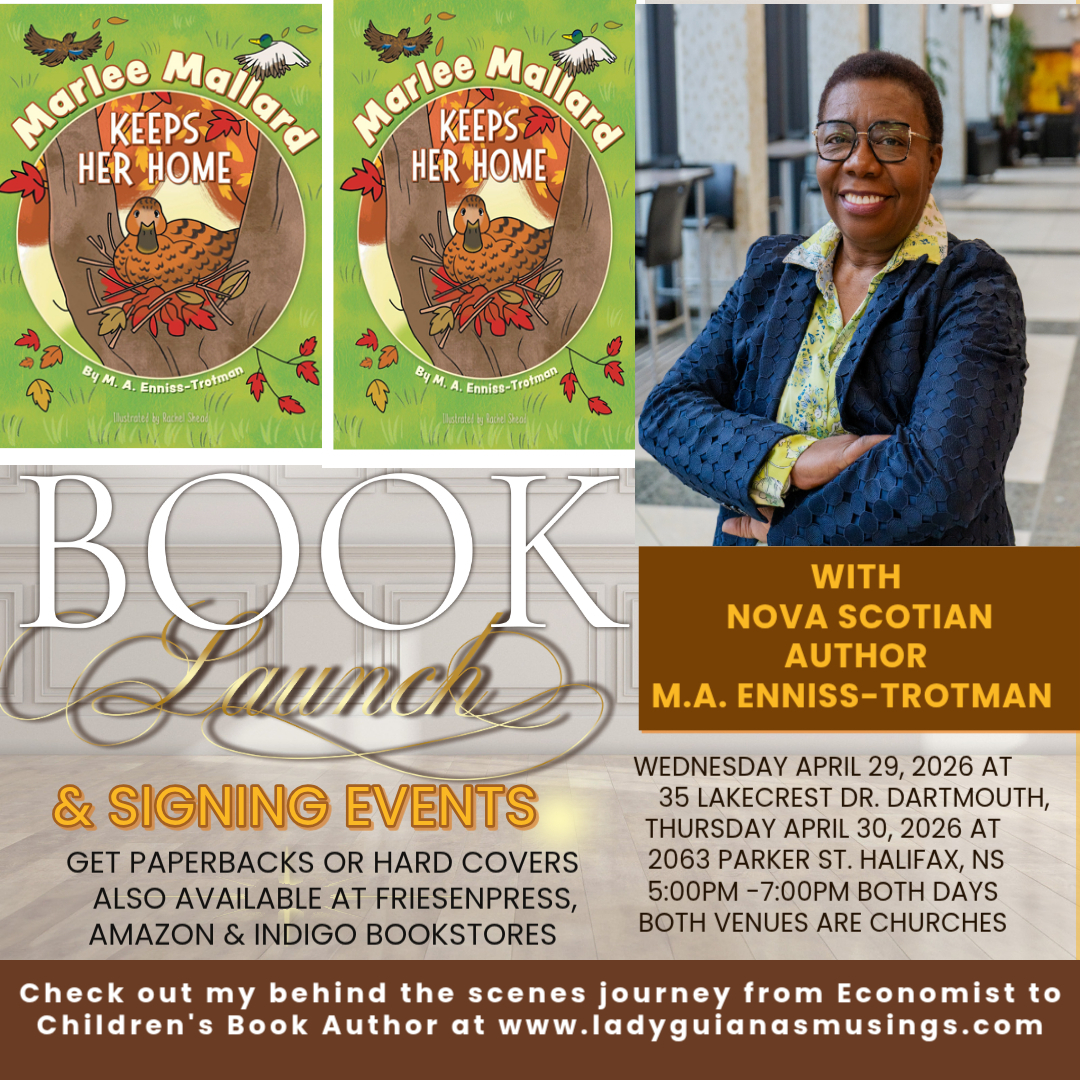
 Writing has always been my quiet hobby that fills my cup in ways nothing else can. Yet, if you had told me a few years ago that I would write a children’s book, I probably would’ve giggled. Not because I didn’t think it was possible, but because it simply wasn’t on my radar.
Nonetheless, that is the wild, beautiful secret of the creative journey: you start in one place, and if you stay open to the nudge, the path unfolds in the most unexpected ways. This month, I am pulling back the curtain on my path to creating Marlee Mallard Keeps Her Home. It’s a project that brought me full circle, and I hope it encourages you to trust your own instincts, no matter how “off-track” they might seem.
The Spark: Listening to the Whisper
If you have ever felt a quiet, persistent tug at your heart—a whisper that refuses to be ignored—then you know how this story begins. I didn’t plan this, but recently, something shifted. A creative spark began to glow, and before I knew it, I was leaping headfirst into a world I had never explored- writing my first children’s book.
I want to share the reality of my writing journey—not just the glossy, finished book cover, but the “messy middle,” the detours, and the joyful surprises. Whether you’re dreaming of your own book or just curious about the anatomy of an idea, I hope this gives you permission to follow your own whisper.
The Origin: Where It All Began
This wasn’t a calculated move; it was a “heart nudge.” I’ve been in a season of transition lately—physically, creatively, emotionally, and spiritually—and through that shift, a calling bubbled up. I wanted to do something that mattered.
An amateur psychologist at heart, I’ve always been curious about how humans tick. I’ve also attempted songwriting (admittedly, with more passion than skill!), but I realized that every story has a heartbeat. I call it the Rhythmic DNA—that invisible flow that connects what we feel to the words we choose. Writing for children shares that same elusive rhythmic DNA—the flow between words and feelings—and weaving complex emotions into something simple, periodic, and powerful.
Last July, I felt the first flicker of an image: a mallard duck named Marlee. She was born from memories of my childhood home, where a pair of ducks, Lonely and her sister whose name I can’t remember now, scrounged in a small shallow pond in the yard, oblivious to the world beyond the water’s edge.
Finding the Story: From Memory to Activism
The story truly clicked during my weekly 3.5km run. One of the man streets where I walked and ran was undergoing rapid housing development. Then one morning , I noticed that a thick grove of trees that always offered me shelter on the final leg of my run was simply… gone. I began to wonder: How would this affect Marlee? What would happen to her when the landscape changes overnight? Where would she nest when her shelter disappears?
Marlee Mallard Keeps Her home became a vessel for something I care about deeply: eco-literacy which teaches children about the economics of nature – that every habitat has value and every loss has a cost. Growing up surrounded by fruit trees and vibrant animal and insect life gave me a natural blueprint for environmental stewardship. I wanted to help children process “eco-anxiety”—the worry that comes with losing habitats—by showing them they have a voice. Accordingly, Marlee evolved from a quiet duck into an unlikely activist, standing up for her forest home alongside her other displaced friends.
The Craft: Writing with Rhythm
Writing a children’s book looks simple but every word must earn its keep. Because I knew the message I had so clearly, the first draft poured out of me relatively quickly. It felt like songwriting—finding the “beat” of the story and ensuring the emotional flow carried the reader forward. Since my sketching skills are non-existent, I knew Marlee and her world would need a professional illustrator to bring visual soul to the page. Researching mallard genders, habitats and mating seasons allowed me to give the illustrator a specific emotional language: I wanted Marlee to look worried, fearful, then excited, and finally, triumphant.
The Ups and Downs: Lessons from the “Messy Middle”
Let’s be honest: the creative process was as frustrating as it was rewarding. There were moments when I wanted to walk away. I struggled with story arcs, agonized over the right words, word counts, and faced the painful task of “killing my darlings”—scrapping characters I truly loved because they were cluttering the message.
Why Scrapping Characters Made Marlee Stronger
In a children’s book, every named character is like a brick in your reader’s backpack. For a young child, too many bricks make the story too heavy to carry. As I dove deeper into Marlee’s world, I realized that I had packed too many characters. Although they had names and quirks I adored, I had to let them go to let the story beathe and take flight.
My “Culling” Criteria:
- The “Mirror” Test: If two characters served the same purpose (like two “wise friends”), I combined them. One strong voice is better than two echoes.
- The “Protagonist” Filter: If a character took the spotlight away from Marlee or solved the problem for her, they were cut. Marlee needed to be the hero of her own fight.
- The “Pacing” Check: If a character required a long backstory that slowed down the story’s “heartbeat,” I removed them to keep the plot snappy and engaging.
Having created a “garbage” pile, I wasn’t afraid of it. Every character I cut taught me more about who Marlee was and acted as the invisible scaffolding that allowed the final story to stand, teaching me some important lessons.
Three Vital Lessons from the Struggle:
- The “Garbage” Matters: Your discarded ideas aren’t failures; they are the necessary experiments that lead you to the truth of your story.
- Stay in the “Now“: It’s easy to get paralyzed by deadlines or the very real financial costs. Breakthroughs happen when you stop looking at the mountain and focus on the single sentence right in front of you.
- Fight the Rush: My “economics brain” constantly tried to optimize and speed things up. But this was a passion project. It deserved a pace that was slow, steady, and—most importantly—real.
What This Journey Taught Me
Your creative journey doesn’t move in a straight line. It zigzags, loops, and pauses, but it always moves—bringing every part of you along for the ride.
The published book “Marlee Mallard JKeeps Her Home” is my most recent “inspiration chapter,” but it is also a reflection of everything that came before it. So, if you’re in the thick of your own process (or just gathering the courage to start), here is what I’ve learned from this wild ride:
- Trust the Pivots: I couldn’t have predicted the timeline or the sequence of this project, but I’ve learned that each shift—each “unexpected detour”—led me closer to what felt true. Let your curiosity lead, especially when it takes you off-road.
- All Skills are Connected: Even the things that seem unrelated are feeding your work. My history with attempts at songwriting gave the book some of its rhythm; my interest in psychology gave the characters their heart. No experience is ever wasted.
- Let the Project Change You: Big projects are meant to stretch you creatively, mentally, and emotionally. Don’t resist the tension. Lean into the growth that happens between the first draft and the final page.
- You’re Allowed to Evolve: You don’t have to stick to one niche forever. If a new world is calling, go explore it. Your past labels (like “Economist” or “Strategic Planner”) don’t limit your future possibilities.
| The Marlee Mallard Family Discussion Guide
A Note to Parents: Planting Seeds of Eco-Literacy Writing about Marlee wasn’t just about telling a story; it was about giving children the language to understand the world around them. In a time where “eco-anxiety” is a real weight for many little ones, my goal is to shift the focus toward eco-literacy. By sharing Marlee’s journey, we can help our children move from a place of worry to a place of wonder and agency. I hope this story serves as a gentle conversation starter about protecting the “quiet groves” in your own neighbourhood. Words for Young Activists Habitat (A Home): The specific place where an animal finds food and shelter. If you were a mallard duck like Marlee, what would your dream habitat look like? Displacement (The Shift): When creatures are forced to leave their homes because the environment changes. How do you think Marlee felt when her trees disappeared? Stewardship (The Care): The act of looking after the Earth, even the tiny parts. What is one small “stewardship”or “earth management” job we can do in our garden this week? Eco-Literacy (The Connection): Learning to “read” the signs of nature and understanding that we are all part of one big team. |
Allowing Creativity to be Personal
One of my biggest takeaways is this: the best work comes when we allow creativity to be both personal and polished. It happens when we stop chasing trends and start listening to what lights us up—when we finally make space to respond to those “little nudges” and persistent whispers.
I’d love to hear from you:
Have you ever had a ‘heart whisper’ lead you toward an unexpected project? Or, if you’re in the ‘messy middle’ of something right now, what is one lesson your journey is teaching you? I would love to hear your thoughts.
